
Resin bound vs block paving for a Leicestershire driveway - pros, cons and real costs
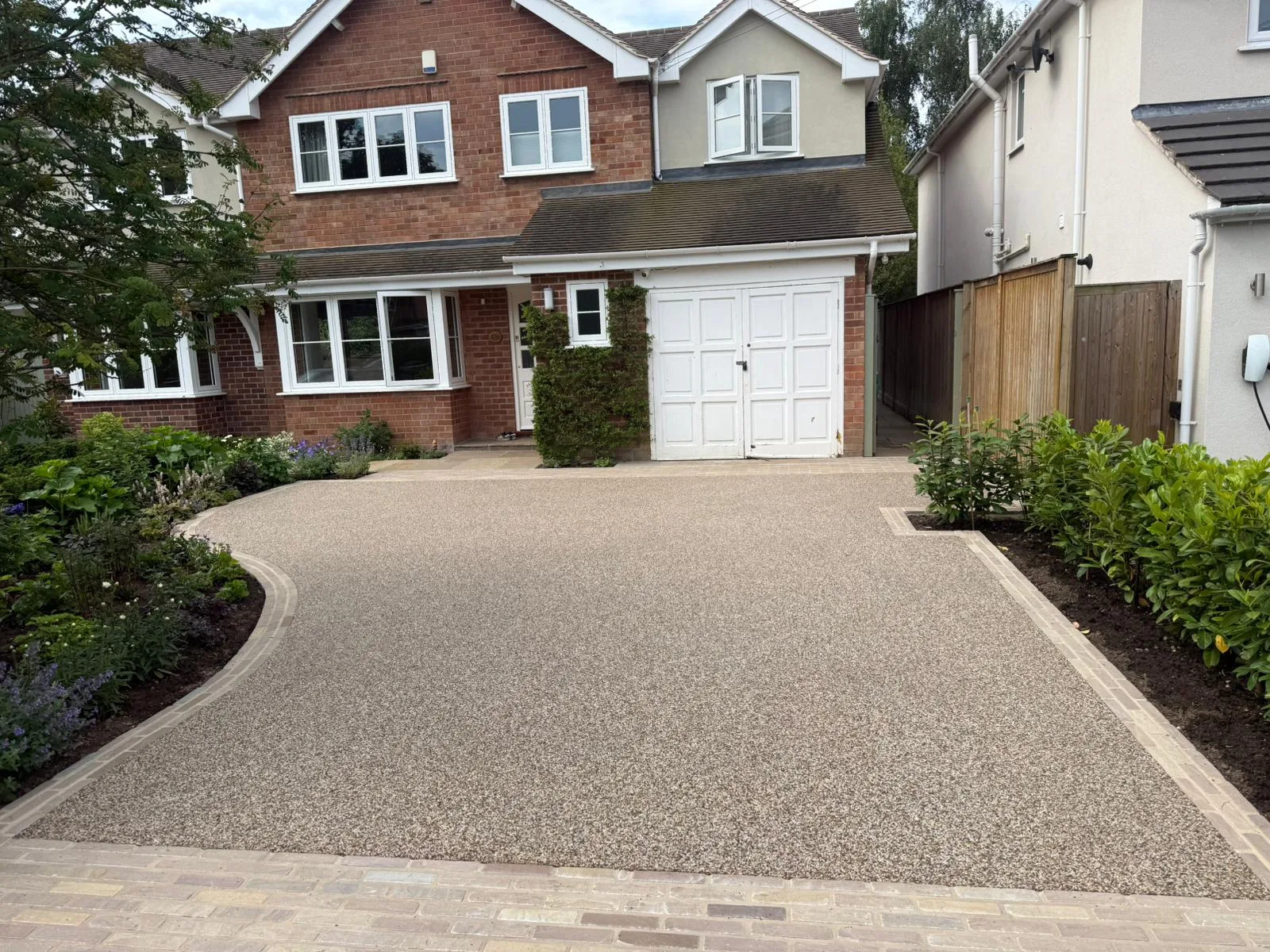
Choosing a new driveway in Leicestershire usually comes down to two options: resin bound or traditional block paving. Both can look excellent when installed properly. The difference shows up after a few winters on local clay - weeds, sinking, pooling water and how much time you spend maintaining the surface.
We're based in Sileby and install resin bound driveways across Charnwood and north Leicestershire. This guide compares the two honestly: look, drainage, maintenance, clay-soil behaviour and cost - so you can decide before you book a survey.
Quick comparison
- Resin bound - seamless, porous (SUDS-friendly), low weed growth, higher upfront cost, needs a proper base on clay.
- Block paving - classic look, individual blocks can be replaced, joints need re-sanding and weeding, more prone to sinking on clay if the base is thin.
- Both fail for the same reason when they fail - groundworks cut short. On Leicestershire clay, the base matters more than the surface finish.
What is resin bound?
Resin bound is a mix of natural stone aggregate and clear resin, trowelled smooth over a solid base. Done properly it is fully porous - rainwater drains through the surface instead of running into the road or pooling by the house. There are no sand joints for weeds to root in, and the finish stays clean with light sweeping and occasional rinsing.
It is not the same as resin bonded (a thin sprinkle of stone stuck on top of resin). Bound is thicker, stronger and designed as a wearing course. We install resin bound over a full excavation and a guaranteed 50mm tarmac base - because a thin base on clay is the number-one cause of resin driveway failures.
What is block paving?
Block paving uses concrete or clay blocks laid on a compacted sub-base with sand-filled joints. It suits period homes and patterned layouts, and a damaged block can be lifted and replaced without redoing the whole drive. That repairability is a genuine advantage.
The downside on Leicestershire clay is maintenance and movement. Sand joints attract moss and deep-rooted weeds. Over time, vehicle weight and clay heave can settle individual blocks, creating dips and puddles. Regular re-sanding and pressure-washing are part of owning a block driveway.
How they behave on Leicestershire clay
Heavy clay expands when wet and shrinks when dry. Any driveway surface - resin or block - will suffer if the excavation and sub-base are too shallow. That is why we treat groundworks as non-negotiable on resin jobs: deep dig, robust base, then the resin wearing course.
Block paving can also perform well on clay with a proper engineered base - but many older drives in Charnwood were laid thinner than they'd be today. If your current blocks are sinking or rocking, replacing like-for-like on the same base often repeats the problem within a few years.
Drainage and planning
Resin bound is permeable when installed correctly, which helps with surface water and SUDS-friendly design. Block paving is not porous through the blocks themselves - water runs to joints and edges, so falls and drainage still need planning. Front gardens that convert lawn to hardstanding may need to meet local permeable-surface rules; a free on-site survey is the place to check what applies to your property.
Maintenance: what you actually do each year
Resin bound
- Sweep leaves and debris so organic matter doesn't sit and stain
- Occasional hose or light wash
- No joint weeding or re-sanding
Block paving
- Weed and moss control in joints
- Re-sand joints as they wash out
- Pressure-washing and occasional block replacement where settlement shows
How costs compare in 2026
There is no single price for either surface - driveway size, excavation depth, edgings, drainage and access all change the quote. In broad terms for Leicestershire:
- Block paving - often lower upfront cost for a comparable footprint, especially if you reuse an existing sound base (we usually won't recommend that on clay without checking).
- Resin bound - typically a higher upfront investment because of premium materials and the full base we insist on. Lower ongoing maintenance and fewer weed/settlement call-backs over the life of the drive.
We don't publish a fake per-square-metre figure online - groundworks on clay vary too much. What we do offer is a free on-site survey and a fixed-price quote for the exact drive, including excavation and base. That is the only number worth planning around.
Which should you choose?
Choose resin bound if you want a seamless modern finish, strong drainage performance, minimal weeding and you're happy to invest more up front for lower maintenance. Choose block paving if you prefer a traditional patterned look, may want to lift individual units later, and accept joint maintenance as part of ownership.
Either way, ask whoever quotes you what depth of excavation and what base they include. On Leicestershire clay, that answer matters more than the brochure photo.
Next step
If you're comparing resin and block for a driveway in Charnwood or north Leicestershire, book a free survey with Garden Innovations. We'll measure up, check levels and drainage, and give you a fixed price for a resin bound driveway built properly for local ground - not a thin top coat over hope.